The Hidden Energy Losses of a Smart Home: Why Smart Gadgets Do Not Always Help Save Power?
The smart home is often presented as a simple path toward lower energy use. A thermostat learns daily routines. Lights switch off automatically. Sensors detect movement. Apps show how much electricity is being consumed in real time. In theory, all of this should make a home more efficient. Yet the reality is more complicated. A smart home can reduce waste, but it can also create new forms of hidden consumption that are easy to ignore.
The problem is not that smart technology is useless. Many smart systems can genuinely help households manage heating, cooling, lighting, and appliances more intelligently. The problem appears when the idea of efficiency becomes confused with the act of connecting everything. A device does not become energy-saving simply because it is smart, wireless, or app-controlled. In some cases, the additional electronics, standby modes, cloud connections, and constant data exchange can quietly increase the total energy demand of a home.
The Myth of Automatic Efficiency
Many people assume that a smart gadget automatically makes a home greener. This assumption is understandable. Smart devices are usually marketed through the language of control, optimization, automation, and savings. A smart plug promises to monitor consumption. A smart speaker controls lights by voice. A smart camera improves security. A smart display gives instant information. Each device appears small, helpful, and modern.
But energy efficiency depends on what the device actually changes. If a smart thermostat reduces unnecessary heating, the benefit can be meaningful because heating is one of the largest energy uses in many homes. If smart lighting prevents lights from staying on for hours, it can also help. However, if a household adds several hubs, speakers, displays, cameras, sensors, routers, and decorative smart lights without changing major energy habits, the result may be different. The home becomes more connected, but not necessarily more efficient.
This is the central paradox of the smart home. The same technology that can reduce waste can also create a new layer of permanent consumption.
Standby Power Never Fully Sleeps
One of the most overlooked sources of energy loss is standby consumption. Many smart gadgets are designed to remain ready at all times. They wait for a voice command, a signal from an app, a motion event, a scheduled automation, or a cloud update. Even when they appear inactive, they are often still drawing power.
A traditional lamp that is switched off uses no electricity. A smart lamp may still need a small amount of power to remain connected. A conventional speaker is silent when unplugged or turned off. A smart speaker must keep listening for activation. A security camera continues recording, detecting, uploading, or waiting. A smart display may dim, but it does not fully disappear from the energy system of the home.
Individually, these devices may consume very little. The hidden issue is accumulation. One gadget seems insignificant. Ten or twenty always-on devices become a different story. The energy loss is not dramatic in a single moment, but it becomes visible over time.
Connectivity Has an Energy Cost
Smart homes depend on networks. Wi-Fi, Bluetooth, Zigbee, cloud platforms, mobile apps, and home automation hubs all make the system feel seamless. Yet every layer of connectivity requires energy. A smart device must communicate, receive updates, maintain a connection, and sometimes send data to external servers.
This energy cost is rarely visible to the user. People see the benefit of convenience but not always the background activity that supports it. A device that turns on a light from a phone may require a router, a cloud service, a mobile app, and a small processor inside the bulb or switch. The action feels effortless, but the infrastructure behind it is not energy-free.
This does not mean that smart technology should be rejected. It means that connectivity should have a clear purpose. A smart system should solve a real energy problem, not simply add digital control to functions that were already efficient.
When Automation Saves Energy
The strongest smart home savings usually happen when automation manages large or frequently wasted loads. Heating, cooling, ventilation, water heating, and lighting are the most obvious examples. A smart thermostat that lowers heating when nobody is home can save more energy than many small gadgets consume. Smart blinds can reduce overheating by controlling sunlight. Motion-based lighting can prevent unnecessary use in corridors, bathrooms, or outdoor areas.
Smart plugs can also be useful when they identify devices that consume power unnecessarily. If a household discovers that an old entertainment system or office setup draws power all night, a smart plug can help shut it down automatically. In this case, the gadget is not just adding convenience. It is correcting a specific pattern of waste.
The difference is purpose. Smart technology saves energy when it changes behavior, reduces unnecessary operation, or improves the timing of consumption. It becomes questionable when it only adds remote control without reducing demand.
The Problem of Smart Clutter
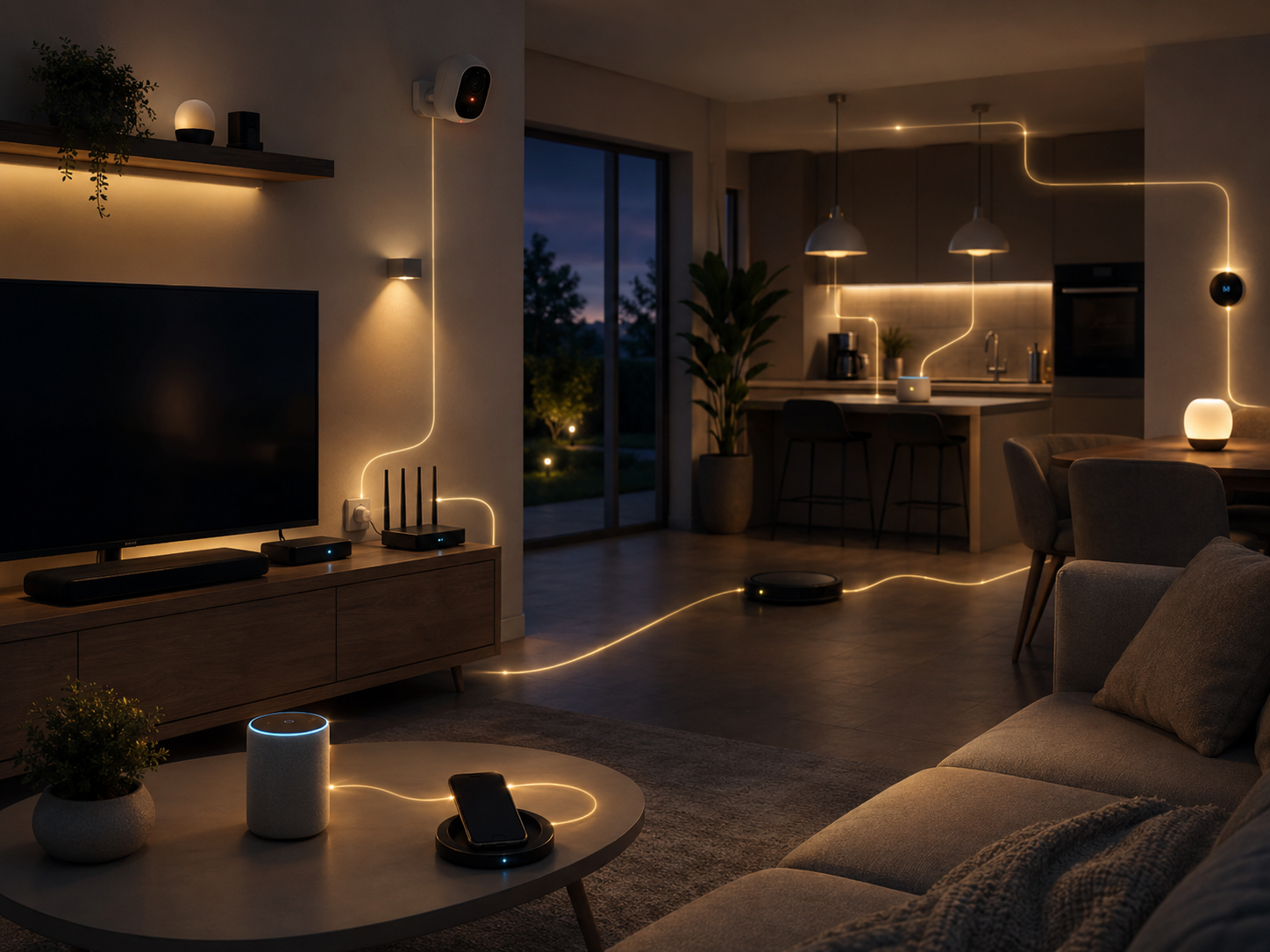
Another issue is smart clutter. As homes become more connected, people may add devices without thinking about the total system. A smart speaker in every room, multiple screens, decorative LED strips, cameras, smart frames, robot appliances, sensors, chargers, and hubs can create a hidden electrical ecosystem.
The home may look clean and modern, but behind the scenes it contains many small power demands. These devices may require charging, standby power, replacements, subscriptions, and software updates. Some may stop receiving support after a few years, forcing users to replace them even if the hardware still works.
This creates an energy problem beyond the electricity bill. Manufacturing, shipping, electronic waste, and short product lifecycles all matter. A truly efficient smart home should not only reduce energy use during operation. It should also avoid unnecessary devices that add complexity without meaningful benefit.
Data Can Change Behavior
One of the most valuable features of a smart home is not automation but awareness. Energy monitors and smart meters can help people understand when and where electricity is being used. This visibility can change habits. A household may notice that heating peaks at certain times, that laundry is always done during expensive hours, or that several devices remain active overnight.
However, information alone does not guarantee savings. Too much data can become noise. If an app shows graphs, alerts, and numbers without clear recommendations, users may stop paying attention. The best systems translate data into simple decisions: lower this setting, schedule this appliance, unplug this device, adjust this routine.
Smart home energy design should focus less on showing everything and more on helping people act.
A Smarter Definition of Smart
The future of the smart home should not be measured by the number of connected gadgets. A home is not smarter because every object has an app. It is smarter when technology makes daily life more comfortable with less waste, fewer distractions, and lower unnecessary consumption.
This requires a more selective approach. Before adding a device, homeowners should ask what problem it solves. Does it reduce heating waste? Does it prevent lights from staying on? Does it manage energy during peak hours? Does it provide useful data? Or does it simply add another standby load?
Smart gadgets can absolutely support energy efficiency, but they must be part of a thoughtful system. The hidden energy losses of smart homes remind us that convenience has a cost. The goal is not to make every object connected. The goal is to make the home more responsive, more efficient, and less wasteful.
A smart home should not only be easy to control. It should know when not to consume.
Leave a Reply