
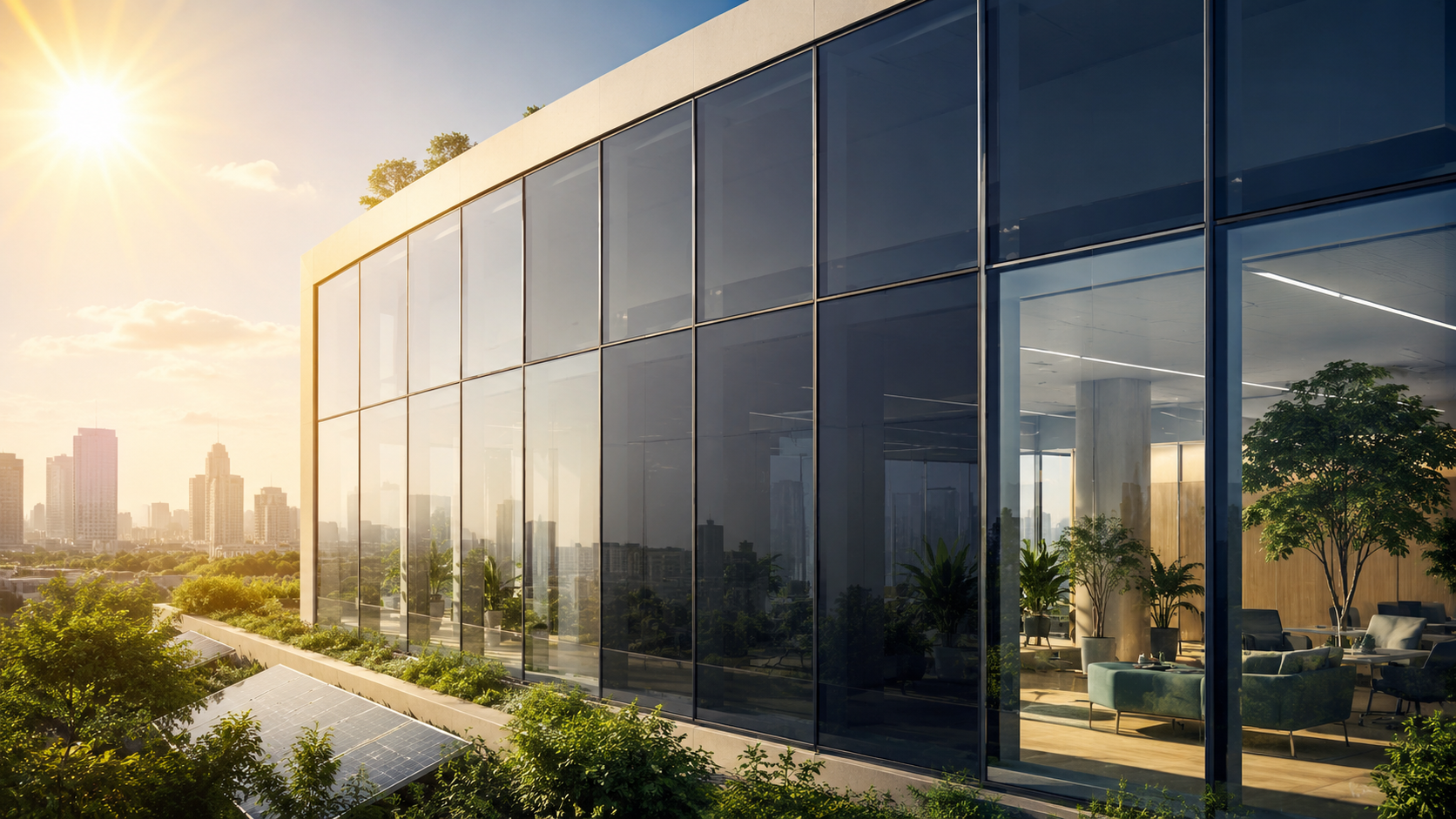
Smart Windows with Dynamic Tinting to Protect Buildings from Overheating
Buildings are often judged by how much energy they consume, but one of the most important questions is how much heat they allow inside. In many cities, summer overheating is becoming a serious design problem. Large glass surfaces bring daylight, openness, and visual comfort, but they can also turn interiors into heat traps. As temperatures rise and cooling demand grows, windows are no longer just passive openings in the wall. They are becoming active parts of the building’s energy system. Smart windows with dynamic tinting offer a different approach to thermal comfort. Instead of relying only on blinds, curtains, external shading, or air conditioning, these windows can change their transparency depending on sunlight, temperature, time of day, or user preference. The goal is simple: let in useful daylight while reducing excessive solar heat. In the context of energy-efficient buildings, this technology has the potential to change how architects, engineers, and homeowners think about glazing.
A building envelope separates the indoor environment from outdoor conditions. Walls, roofs, insulation, ventilation systems, and windows all influence how much energy is needed to keep the interior comfortable. Among these elements, windows are especially complex. They must provide daylight and views, but they also allow heat to enter and escape more easily than solid walls. In winter, solar gain can sometimes help warm a room. In summer, the same sunlight can become a problem. South-facing and west-facing windows are particularly vulnerable to overheating because they receive strong sun during critical parts of the day. In offices, schools, apartments, and public buildings, this can lead to uncomfortable indoor temperatures, glare, and higher demand for cooling. Traditional solutions are useful but imperfect. Curtains and blinds block light as well as heat. External shading can be effective but may not fit every building. Reflective glass reduces solar gain but often changes the appearance of the facade permanently. Air conditioning solves the symptom but increases electricity use, especially during peak demand hours. Smart windows try to solve the problem earlier, at the surface where heat enters.
Dynamic tinting refers to glazing that can adjust how much light and solar heat passes through it. Different technologies can achieve this effect. Electrochromic glass changes tint when a small electrical voltage is applied. Thermochromic glass reacts to temperature. Photochromic glass responds to light intensity. Other systems may use suspended particles, liquid crystals, or layered materials to control transparency. The practical result is that the window can shift from clearer to darker states. On a mild morning, the glass may remain transparent to allow daylight and warmth. During strong afternoon sun, it can darken to reduce glare and solar heat gain. In advanced systems, this process can be automated through sensors and building management software. The most important feature is adaptability. A static window has one performance level all day. A smart window can respond to changing conditions. This makes it more suitable for buildings where sunlight varies across seasons, weather, orientation, and occupancy patterns.
The main energy benefit of dynamic tinting is the reduction of cooling load. When less unwanted heat enters the building, air conditioning does not need to work as hard. This is especially valuable during hot afternoons, when electricity grids are already under pressure from cooling demand. However, the advantage is not only about temperature. Smart windows can reduce overheating while still preserving daylight. This matters because daylight has architectural and psychological value. People generally prefer spaces with natural light, and well-designed daylight can reduce the need for artificial lighting during the day. The challenge is balance. A dark interior may save cooling energy but increase lighting demand and reduce comfort. A bright interior may feel pleasant but become too hot. Dynamic tinting allows a building to adjust this balance throughout the day rather than choosing one fixed condition.
Energy efficiency is often discussed in technical terms, but human comfort is central to the issue. When people feel too hot or experience glare, they respond. They lower thermostats, close blinds, turn on fans, use extra lighting, or avoid certain rooms. These small behavioral reactions can change the real energy performance of a building. Smart windows can help by making comfort more automatic. If a room becomes bright and hot, the glazing can darken before occupants feel the need to intervene. In offices, this can reduce conflicts over blinds and thermostats. In homes, it can make rooms usable during sunny hours without forcing residents to choose between view and comfort. Good energy design should not ask people to suffer in order to save power. It should make efficient behavior easier. Dynamic tinting works best when it supports comfort naturally.
Smart windows become more powerful when connected to sensors and control systems. A window that simply reacts to sunlight is useful. A window that understands indoor temperature, occupancy, weather forecasts, electricity prices, and cooling demand can become part of a broader energy strategy. For example, a building may allow more solar gain during a cool morning but reduce it before the afternoon heat peak. A smart control system can coordinate windows with ventilation, blinds, heating, cooling, and lighting. In commercial buildings, this can help facility managers reduce energy waste without constant manual adjustment. Still, automation must be designed carefully. If the system behaves unpredictably, occupants may override it. If windows become too dark at the wrong time, people may switch on lights unnecessarily. The best systems should offer both intelligent automation and clear user control.
Smart windows are not only engineering devices. They also create new architectural possibilities. Large glass facades are often criticized for poor energy performance, especially in hot climates. Dynamic tinting does not solve every problem, but it can make transparent architecture more adaptable. For residential buildings, it can improve the quality of compact apartments with large windows. For schools and workplaces, it can support daylight without excessive glare. For hospitals and care facilities, it can help maintain calm, comfortable interiors while preserving views. In hotels, museums, airports, and public buildings, it can improve comfort across spaces that experience changing sun exposure. The technology may also reduce the need for heavy internal shading. This can make interiors cleaner, views clearer, and facades more consistent. Instead of adding layers after the building overheats, the glass itself becomes responsive.
Smart windows are promising, but they are not a universal solution. Cost remains an important barrier. Installation, maintenance, control systems, and long-term durability must be considered. Some technologies change tint slowly. Others may not reach the desired level of darkness or clarity in all conditions. Retrofitting existing buildings can be more difficult than integrating smart glazing into new construction. There is also the question of climate and orientation. A building in a cool northern region may not need the same strategy as one in a hot urban area. A north-facing window may benefit less from dynamic tinting than a west-facing facade exposed to strong afternoon sun. The technology should be used where it solves a real performance problem. Smart windows should also be combined with good passive design. Shading, insulation, ventilation, orientation, and building form still matter. Dynamic tinting is not a replacement for architectural thinking. It is a tool that works best when the rest of the building is designed intelligently.
The deeper importance of smart windows is that they change the idea of the building envelope. In the past, windows were mostly fixed components. They had a certain level of insulation, transparency, and solar control. Once installed, their behavior remained largely the same. Dynamic tinting turns the envelope into something more responsive. The building can react to heat before cooling systems are forced to compensate. It can protect occupants from glare without cutting them off from daylight. It can reduce energy demand during critical hours while keeping interiors more livable. As Europe and other regions face hotter summers, rising cooling needs, and pressure on electricity grids, technologies that reduce overheating at the source will become more important. Smart windows are not a magic answer, but they represent a practical shift in thinking. The future of efficient buildings will not depend only on producing cleaner energy. It will also depend on designing spaces that need less energy to stay comfortable. A window that can respond to the sun is more than a modern detail. It is a small but meaningful step toward buildings that understand their environment instead of merely resisting it.
Leave a Reply